
Protect the asphalt you already have
Sealcoating in Ames, IA
Sealing slows the sun and water damage that turns a black driveway gray, brittle and cracked.
- Free on-site estimates with a written, itemized price
- City of Ames driveway permit and concrete approach rules checked before work
- Paving scheduled for warm, dry ground so the mix compacts
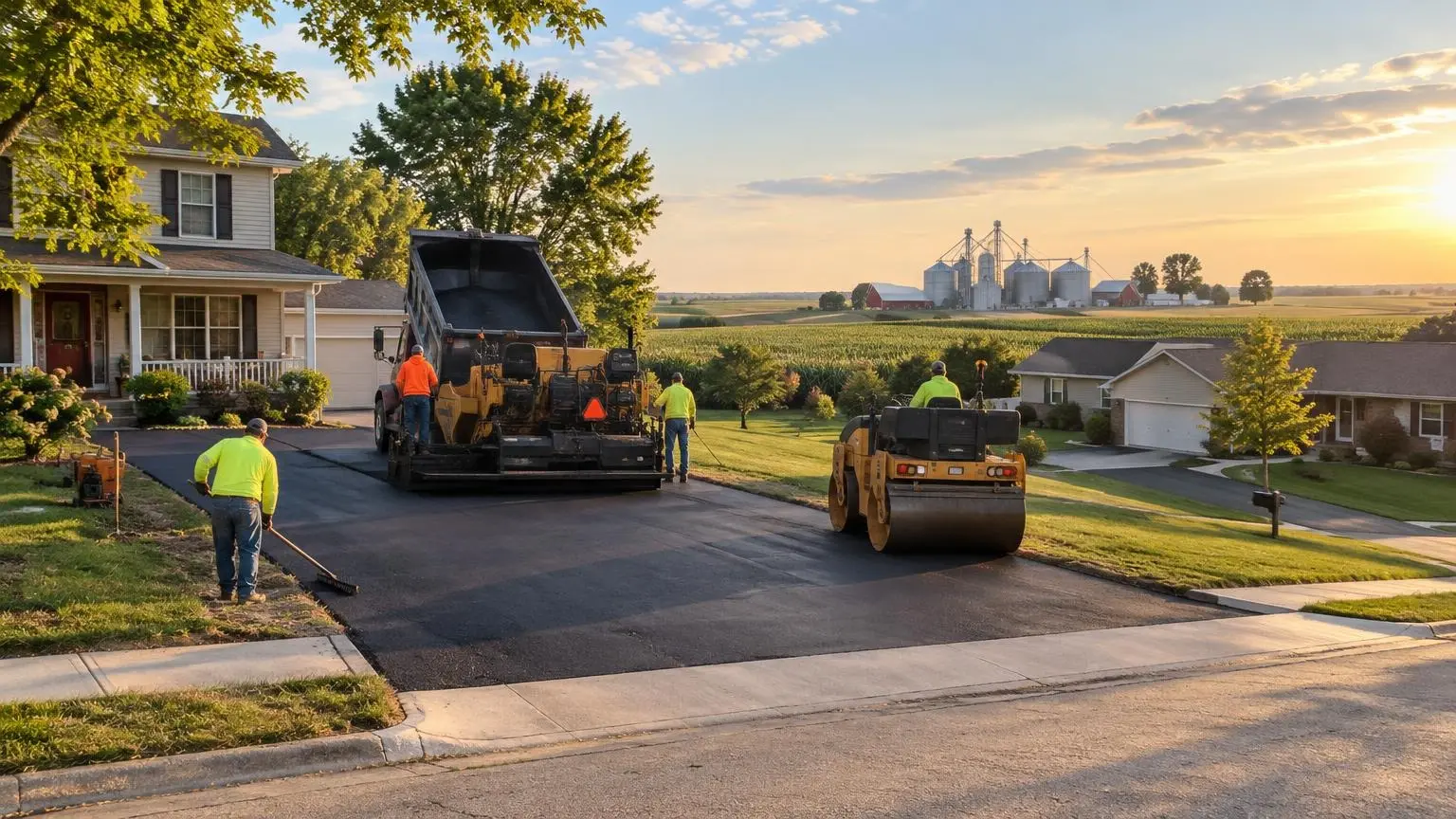
What Sealcoating Does, and What It Does Not
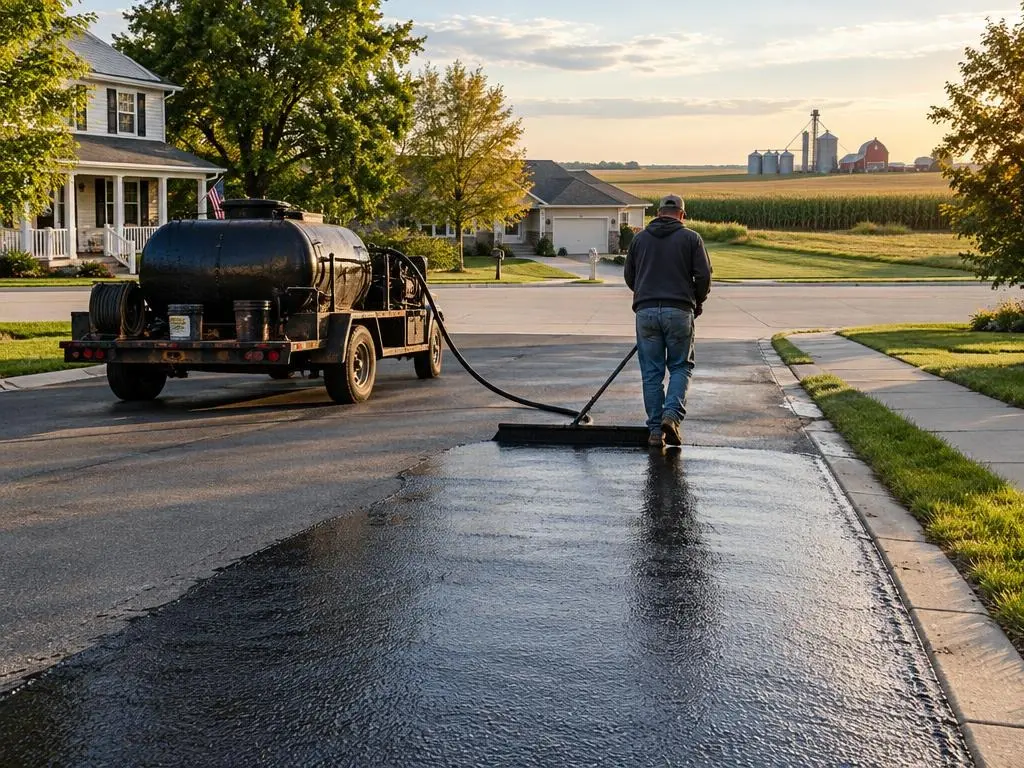
Sealcoating is a thin protective coating sprayed or squeegeed over asphalt. Sun oxidizes the asphalt binder and turns a new black driveway gray and brittle within a few years; road salt, gasoline and oil soften it; and water works into the surface and freezes. A sealcoat slows all of that. In Ames, where salt trucks run all winter and spring brings weeks of freeze and thaw, it is the cheapest way to stretch the life of a driveway.
It does not fix structural problems. Sealer will not hold a sunken area up or bridge a wide crack, and painting over alligator cracking just makes a black version of the same failure. Cracks get filled first, and damaged areas get patched before any sealer goes down.
When to seal
- New asphalt: wait until it cures, usually three to six months after paving
- After that: every few years, depending on traffic and how much sun it gets
- Weather: dry, between about 50 and 95 degrees, with no rain expected for a day
In the Ames area that puts most sealing between late May and mid September. A cold, damp October day does not let the sealer cure properly.
How we apply it
We clear grass from the edges, blow and sweep the surface, and treat oil spots so sealer will bond. Cracks are filled. The sealer goes on in one or two coats depending on traffic, and edges along the garage, walk and lawn are cut in by hand. We mark off the area and tell you when you can walk on it and when you can drive on it, typically 12 to 72 hours depending on temperature and humidity.
Sealer types
Most residential work uses an asphalt emulsion sealer. HomeGuide notes that coal tar sealers are banned in many areas, and we do not use them. Lots that carry heavy traffic may get a second coat or added sand for traction.
Sealing parking lots
For businesses, apartments and churches, sealing is usually paired with crack filling and restriping, since the sealer covers the old lines. We seal in sections so the lot stays usable and restripe the same day or the next.
Signs your driveway is due
- The surface has faded from black to gray
- Small stones are loosening and showing on top
- Water soaks in instead of beading on the surface after rain
- Hairline cracks are starting to show
- Oil or gas stains have softened spots where cars park
Any one of these means the protective binder on top is wearing away. Sealing at this stage costs a fraction of what resurfacing will cost once the surface starts to ravel.
Sealcoating Services
Each sealcoat job starts with cleaning and crack work.
Surface cleaning
Edges trimmed, debris swept and blown, oil spots primed.
Crack filling
Cracks filled before sealing so the coat does not just bridge them.
Driveway sealcoating
One or two coats of asphalt emulsion sealer, edges cut in by hand.
Parking lot sealcoating
Sections sealed in phases, followed by restriping.
Typical Sealcoating Costs
| Area | Published national range |
|---|---|
| Driveway sealing, installed (HomeGuide) | $1 to $2 per sq ft |
| One-car, 288 sq ft (HomeGuide) | $290 to $580 |
| Two-car, 400 sq ft (HomeGuide) | $400 to $800 |
| Two-car, 576 sq ft (HomeGuide) | $580 to $1,200 |
| Three-car, 864 sq ft (HomeGuide) | $860 to $1,700 |
| Parking lot sealcoating (HomeAdvisor) | $0.15 to $0.30 per sq ft |
National ranges from HomeGuide and HomeAdvisor. Crack filling, oil-spot treatment and a second coat add to the total. Your written estimate is the price.
How It Works
1. Inspection
We check that the asphalt is cured and sound enough to seal.
2. Prep
Edges trimmed, surface cleaned, oil spots primed, cracks filled.
3. Application
Sealer applied in one or two coats in dry, warm weather.
4. Cure
Area blocked off; you get walk-on and drive-on times.
Sealcoating Questions
How often should I sealcoat in Ames?
Every few years for most driveways, more often for busy lots. HomeGuide gives a range of every 2 to 10 years depending on sealer and climate. Salt, sun and traffic all shorten the interval.
Can I seal a brand-new driveway?
Not right away. New asphalt needs three to six months to cure. Most new driveways get their first sealcoat the following season.
Is sealcoating worth it on an old cracked driveway?
Only if the cracks are filled first and the base is sound. On a driveway with widespread alligator cracking or heave, sealing is cosmetic. We will tell you which you have.
Why can't you seal in October?
Sealer needs dry weather above about 50 degrees to cure. Cold nights and damp mornings in fall leave it soft and prone to wearing off.
How long before I can drive on fresh sealer?
Usually 12 to 72 hours, depending on temperature, humidity and sun. You can typically walk on it within a few hours. We give you times for your job.
Sealcoating Service Areas
- Asphalt Paving in Ames, IA
- Asphalt Paving in Nevada, IA
- Asphalt Paving in Boone, IA
- Asphalt Paving in Huxley, IA
- Asphalt Paving in Story City, IA
- Asphalt Paving in Gilbert, IA
- Asphalt Paving in Slater, IA
- Asphalt Paving in Roland, IA
- Asphalt Paving in Maxwell, IA
- Asphalt Paving in Colo, IA
- Asphalt Paving in Zearing, IA
- Asphalt Paving in Madrid, IA
- Asphalt Paving in Ogden, IA
- Asphalt Paving in Woodward, IA
- Asphalt Paving in Polk City, IA
- Asphalt Paving in Webster City, IA
- Asphalt Paving in Marshalltown, IA
- Asphalt Paving in Jewell Junction, IA
- Asphalt Paving in Perry, IA
- Asphalt Paving in Jefferson, IA
Get a Sealcoating Estimate
Book driveway or lot sealing for the warm, dry part of the season.